The Fence and the Vine
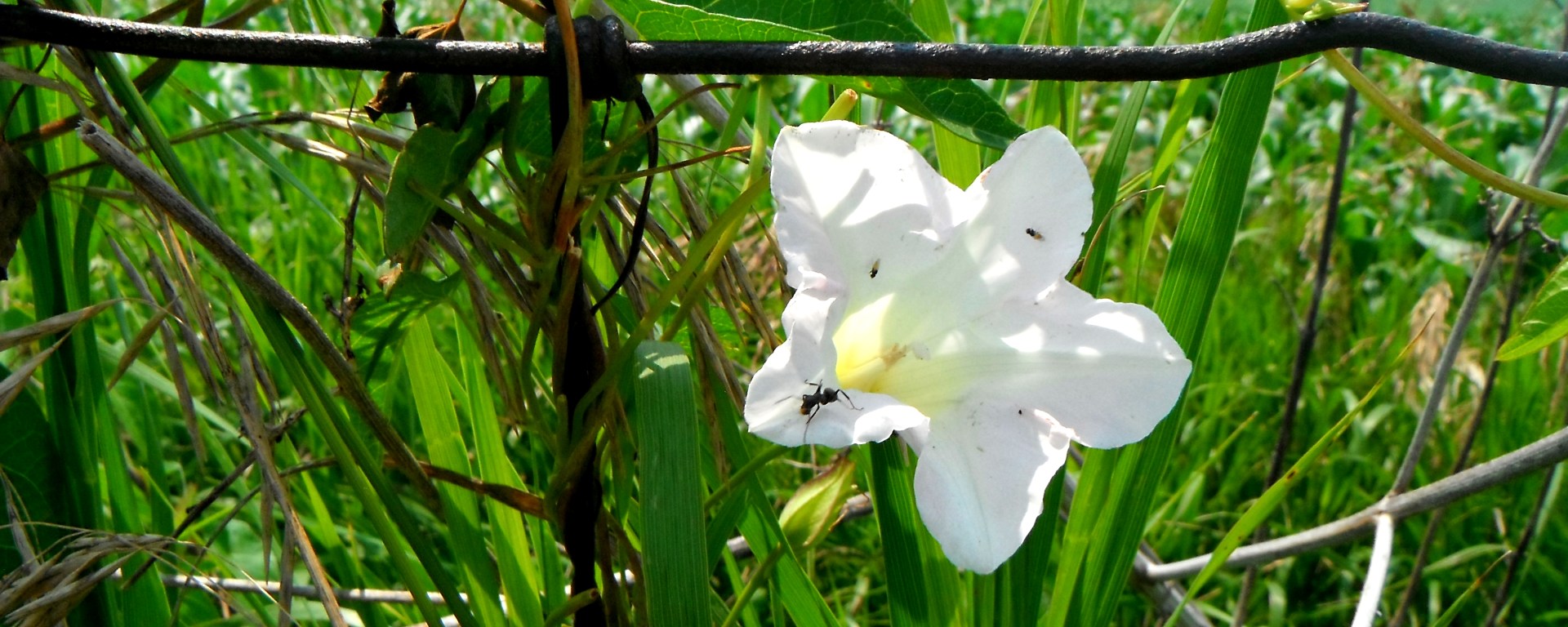
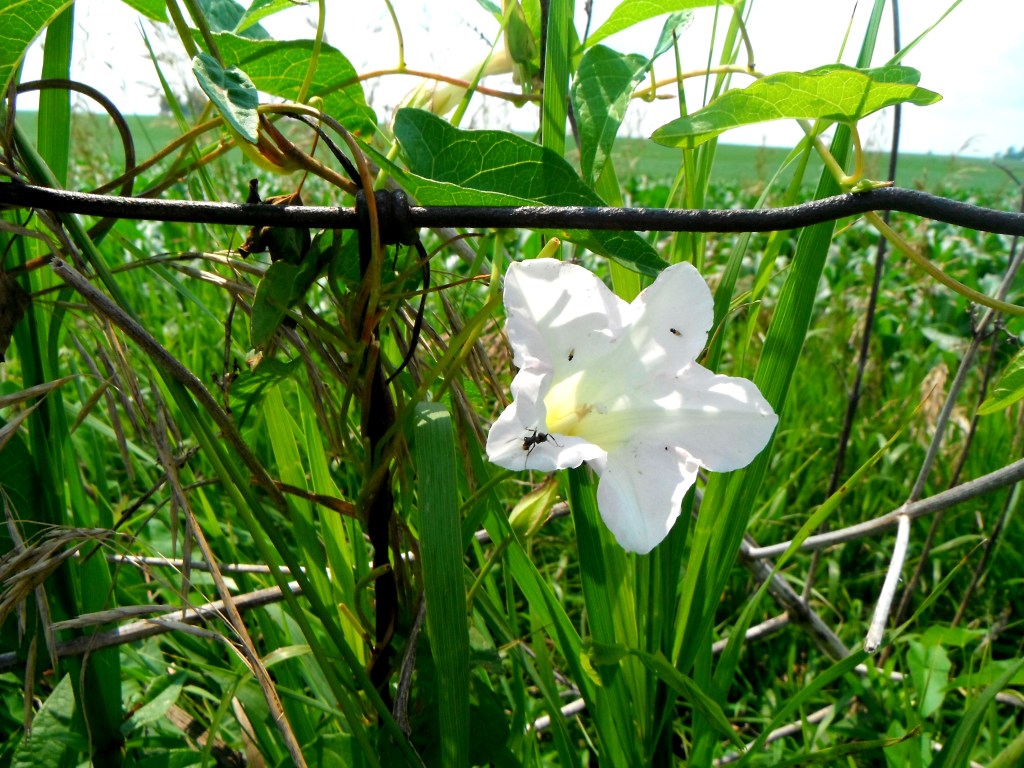
Along a lane between two fields there is a barbed wire fence, and on this fence a vine ‘twines ’round and ’round and imitates the twisted metal, green on rusted black. The fence supports the vine, which flourishes beyond its lone ability. The vine adorns the fence, providing companionship to the neglected sentinel. From this relationship the vine brings forth a bloom which opens wide to embrace the world. This bloom is fearless, welcoming the wind and rain, the dust and sun, the birds and insects. Though slightly crumpled and lightly sprinkled with dirt, the flower offers what it can to those who pass, and they, in turn, try to minimize their wear and tear. The flower, though, does not begrudge the minor accidents and slights because it learned to love from the fence and the vine.
Discussion
Today, I tried my hand at prose poetry. I didn’t research exactly what it is or techniques professionals use when writing it. I just tried to write something simple and pretty and followed a mostly iambic meter (unstressed, stressed). I didn’t try to rhyme, and though I considered splitting the sentences up and turning the piece into a more traditional poem, I ultimately liked the prose form best.
Since I was writing late, there were a couple places where I fudged the stress in a word rather than taking some time to let it sit and come back later. Examples include “flourishes”, “sentinel”, and “welcoming”. All three of these examples are technically dactylic (stressed, unstressed, unstressed) in reality, but I decided the third syllable would be stressed instead. Writer’s choice, you know? That’s my excuse, anyway. There were also a few places where I allowed two or three similarly stressed syllables in a row, rather than sticking doggedly to the unstressed, stressed iambic pattern. Below is The Fence and the Vine again, with the stressed syllables bolded to give you a better idea of what I mean:
Along a lane between two fields there is a barbed wire fence, and on this fence a vine ‘twines ‘round and ’round and imitates the twisted metal, green on rusted black. The fence supports the vine, which flourishes beyond its lone ability. The vine adorns the fence, providing companionship to the neglected sentinel. From this relationship the vine brings forth a bloom which opens wide to embrace the world. This bloom is fearless, welcoming the wind and rain, the dust and sun, the birds and insects. Though slightly crumpled and lightly sprinkled with dirt, the flower offers what it can to those who pass, and they, in turn, try to minimize their wear and tear. The flower, though, does not begrudge the minor accidents and slights because it learned to love from the fence and the vine.
I suppose some of the more awkward stressing choices don’t matter a whole lot unless the reader is very specifically paying attention to the use of meter in the prose. As long as the piece flows well and there aren’t a lot of awkward places where the pacing stumbles, those three example words (flourishes, sentinel, and welcoming) can be dactylic and not detract from the overall sound of the piece too much. Of course, I’m too close to the piece right now to be able to truly tell if the pacing flows nicely, but I’m satisfied with what I’ve accomplished at this point.
The Fence and the Vine ended up having two distinct parts – the relationship between the fence and the vine, and the personality of the flower, their child. When I realized this I considered having the first part be iambic and then gradually shift into one of the longer meters like dactylic or anapestic (unstressed, unstressed, stressed) for the second, but, again, I wrote The Fence and the Vine late the night before I posted it and chose to have a finished piece rather than have nothing show up on the blog. However, this idea still intrigues me, and I may return to The Fence and the Vine at a later date to revise and experiment with it. Maybe I can adjust some of those awkward examples of meter while I’m at it.
 Staring Out A Window