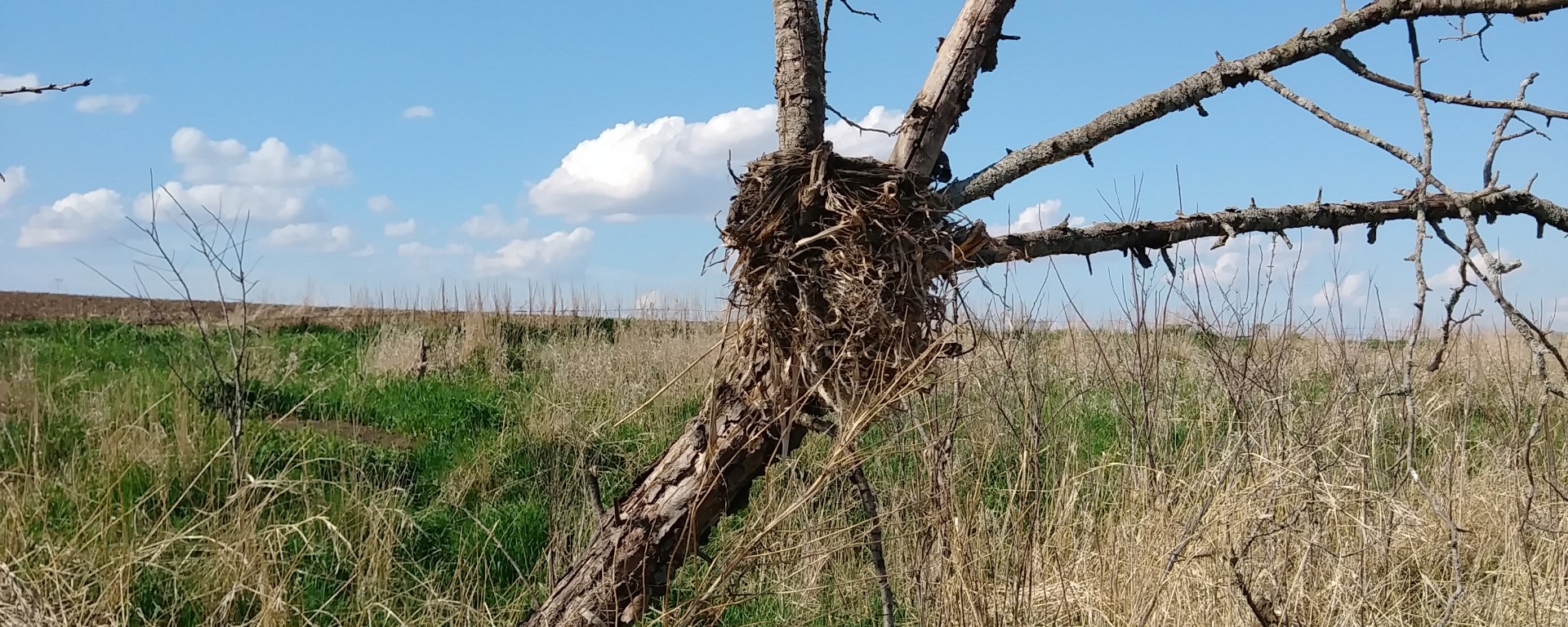
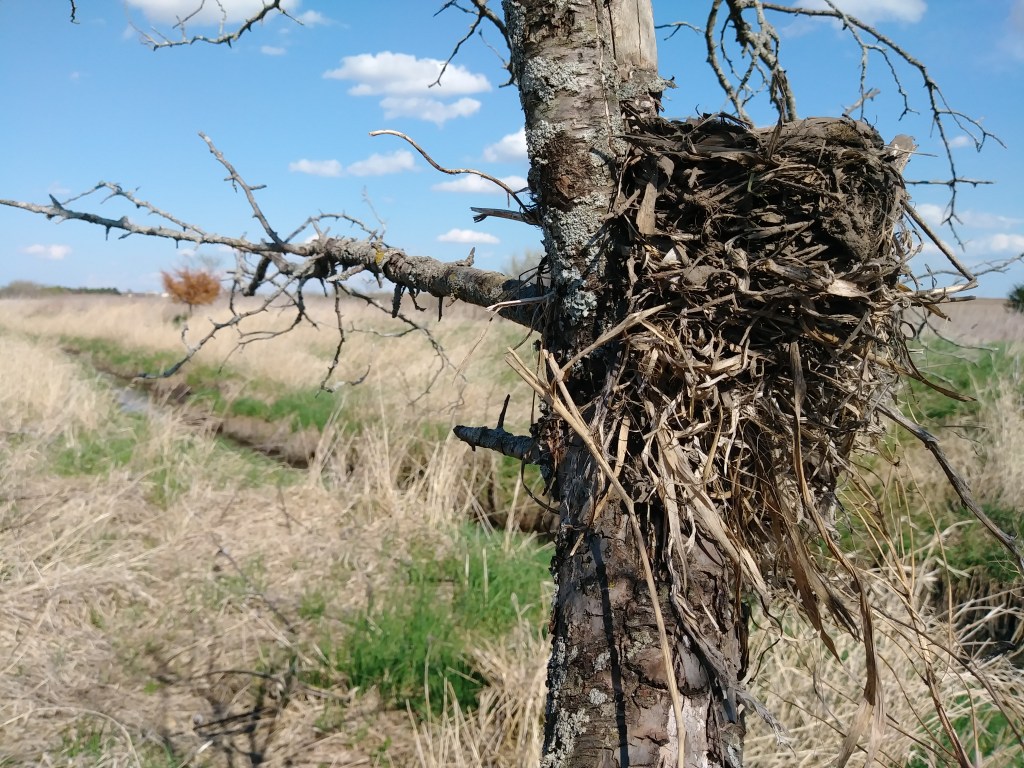
I saw a nest at eye level in the juncture of a scrawny tree that stood alone on the bank of a stream. Lovingly made of grass and twigs and mud, its solid foundation where four thin branches diverged was undermined by its full exposure to the wind and its proximity to the ground. Perhaps these drawbacks were why the nest was unoccupied. Perhaps its inhabitants were preyed upon by local raccoons or opossums. Maybe the wind and rain drove them away. Or, maybe, the nest had already served its purpose by the time my path stumbled by. Though one would expect trees to be green in May, perhaps this young one had once been full of leaves. Maybe an inexperienced couple had chosen this tree, unaware of the hazards of living so close to the ground. Whatever the reason, the nest was now empty and silently remembering the ghosts of the lives it once held, like the small, gray, weather-beaten, empty shells of homes one can still see in the Midwest, the High Plains, the Desert West. Often askew, one wonders if time or the wind or both are to blame for their acute relationship with the ground. The wind enters these corporeal memories through cracks or missing windows and doors, swirls around the ghosts still present, steals the words from their lips, and scatters them across the landscape so “hello” is separated from “there” by thirty miles. Empty, forgotten, abandoned. The assumption is failure, but that is often based on unfounded imaginings rather than reality, which is rarely as simple as we’d like.
 Staring Out A Window